In 2024, British Columbia modernized the law behind fire safety. If you own or manage a building in BC — or run a fire protection company that services one — it’s worth understanding what changed, because the new framework puts real teeth behind keeping your fire equipment compliant.
What changed: the Fire Safety Act
As of August 1, 2024, the Fire Safety Act replaced the old Fire Services Act as the law governing fire safety in British Columbia. It’s administered by the Office of the Fire Commissioner (OFC), and it modernizes how fire safety is enforced across the province — including new processes for fire orders, inspections and appeals, and a risk-based approach to compliance monitoring.
Importantly, the day-to-day rules for maintaining your fire equipment still live in the BC Fire Code, which the OFC helps adopt with the Ministry of Housing. The Fire Safety Act is the enforcement framework around it.
The big one: administrative penalties
The most significant change for building owners is a new administrative penalty enforcement framework. Under the Fire Safety Regulation that accompanies the Act, authorities can issue penalties — including daily penalties for ongoing non-compliance and penalties for failing to provide information to a designated inspector or investigator.
In plain terms: fire safety non-compliance in BC is no longer just a note on an inspection report. It can carry a financial cost that accumulates until the problem is fixed.
What it means for building owners
Your obligations for portable extinguishers haven’t gone away — monthly inspections and annual maintenance under the BC Fire Code still apply (see our guide to annual fire equipment inspections in BC). What’s changed is the stakes. With a penalty framework in place and risk-based monitoring, being able to prove your equipment is inspected and maintained — on time, per unit — matters more than ever.
What it means for fire protection companies
For service companies, the shift raises the bar on documentation. Clients will increasingly expect not just the service, but clean, defensible records they can show an inspector. A shop that can hand a client a complete, time-stamped history for every piece of equipment has a real advantage — and one less way to lose a contract.
How FireTag helps BC companies stay ahead of it
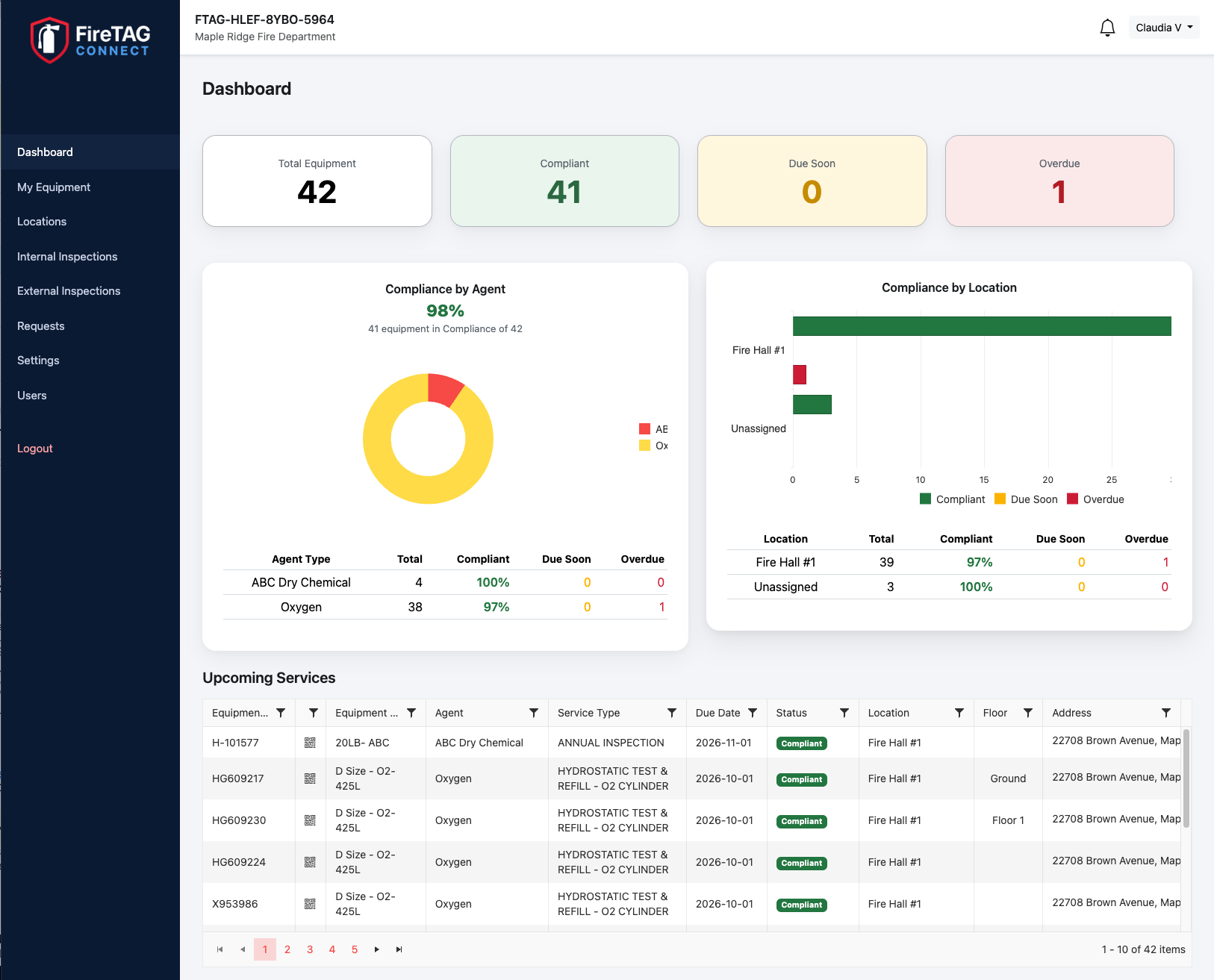
FireTag is built in British Columbia for exactly this. Every extinguisher carries a QR tag with its full service history; FireTag reminds you before any inspection lapses; and every service is recorded with photos and reports your clients — and their authority having jurisdiction — will accept. It’s the documentation layer the new penalty framework makes essential. See how FireTag works for Canadian fire protection companies, or compare the rules across the country in our province-by-province requirements guide.
Requirements and enforcement can vary by local authority, so confirm the specifics for your building with your local fire department or the Office of the Fire Commissioner. Ready to get your records in order? Book a free demo.
about
FireTag
FireTag is QR-based fire equipment tracking software for fire protection companies. One scan shows full equipment history, compliance status and automated inspection reminders.