Fire extinguisher compliance in Alberta is tighter than many business owners realize — in particular about who is allowed to service your equipment. Here’s what Alberta’s fire code requires for portable fire extinguishers, who can do the work, and how to keep records a safety codes officer will accept.
What Alberta law requires
Fire safety in Alberta is regulated under the Safety Codes Act, which adopts the National Fire Code – 2023 Alberta Edition (NFC(AE)) as the fire code in force. The 2023 Alberta Edition is based on the National Fire Code of Canada 2020 and, like every Canadian jurisdiction, it adopts NFPA 10, “Standard for Portable Fire Extinguishers,” by reference for the inspection, maintenance and testing of portable extinguishers.
Enforcement is handled locally by safety codes officers and municipal fire authorities, with provincial oversight from the provincial fire authority (Alberta Municipal Affairs).
The inspection and maintenance schedule
Because Alberta adopts NFPA 10, the schedule is the same four intervals used across Canada:
- Monthly inspection — a visual check that the extinguisher is present, accessible, charged and undamaged.
- Annual maintenance — a full examination by a qualified technician.
- 6-year internal examination — for most stored-pressure extinguishers.
- 12-year hydrostatic test — or sooner if corrosion or damage is found.
Our complete inspection checklist breaks down exactly what each of these covers.
Who can perform the work in Alberta
This is where Alberta is specific. The monthly inspection may be done by the building owner or a designated employee. But the annual maintenance, internal examination and hydrostatic testing must be performed by a qualified person — generally someone who holds an approved training certificate from a public post-secondary institution and who works for a certified fire extinguisher shop. In other words, you can’t have just anyone sign off your annual service; it has to be a recognized service agency.
Record-keeping and tagging
Each extinguisher must carry a tag showing its service history — the date of the last annual maintenance, last recharge, and the monthly and annual record, along with the service agency’s details. If a safety codes officer asks and you can’t produce the records, you’re treated as non-compliant even if the work was actually done.
What happens if you don’t comply
Under the Safety Codes Act, authorities can issue orders to correct deficiencies, and continued non-compliance can carry penalties — plus the insurance and liability exposure that comes with an uninspected extinguisher after a fire. Requirements and interpretation can vary by municipality, so confirm the specifics with your local fire authority.
How FireTag keeps Alberta businesses compliant
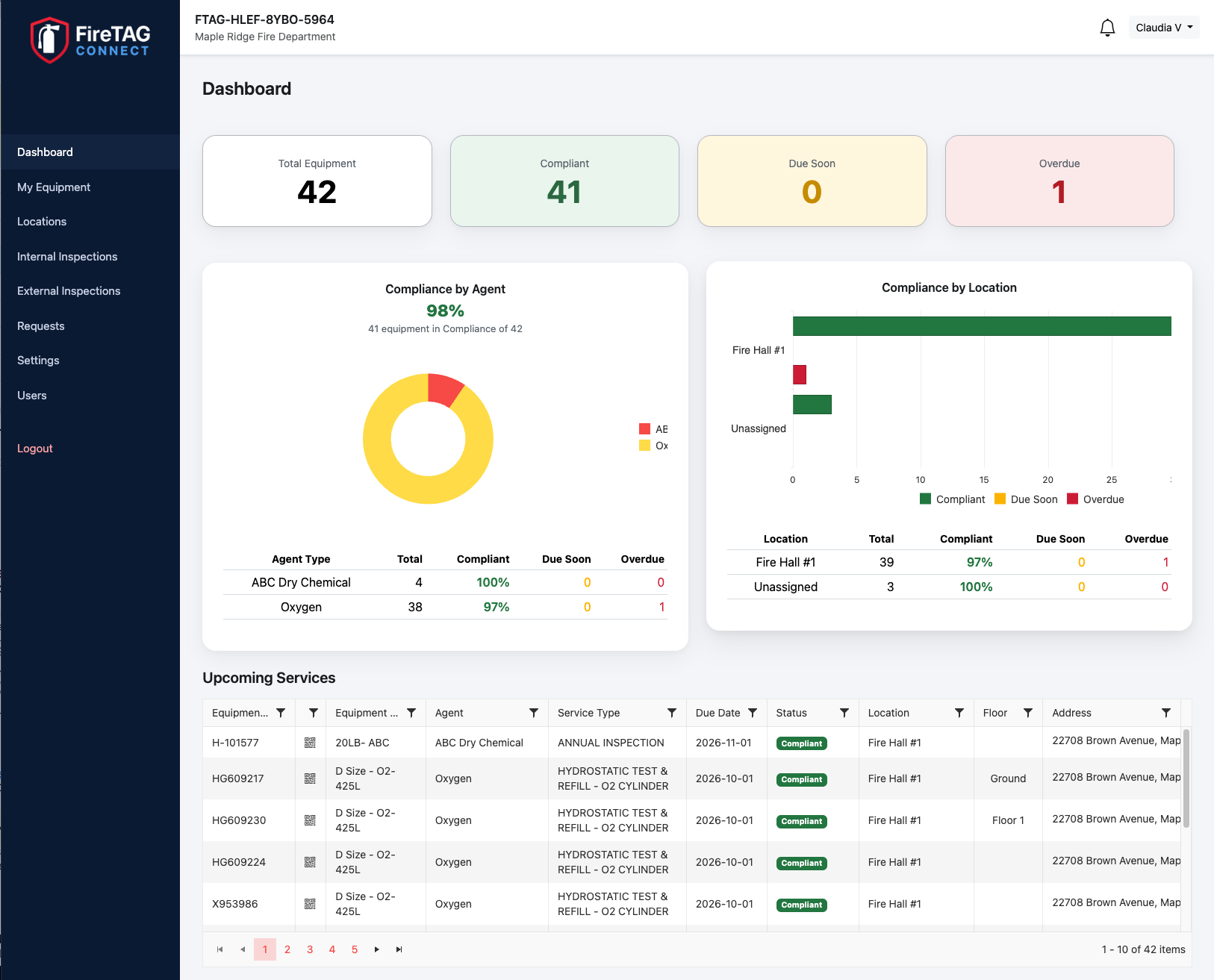
FireTag tags every extinguisher with a QR code. One scan shows its full service history, next due date and compliance status, and FireTag sends reminders before anything lapses — so the annual service done by your certified shop is always on record and on time.
Book a free demo and see how FireTag keeps your Alberta fire equipment compliant.
Across Canada: see how the rules compare in our province-by-province guide to fire extinguisher inspection requirements.
about
FireTag
FireTag is QR-based fire equipment tracking software for fire protection companies. One scan shows full equipment history, compliance status and automated inspection reminders.